
Our office

Federal defenders for two judicial districts, working from Lafayette, Baton Rouge, and Shreveport.

What we do

The Office of the Federal Public Defender provides legal representation to people charged with federal crimes who cannot afford to hire a lawyer. Our work is authorized by the Criminal Justice Act of 1964, 18 U.S.C. § 3006A. The federal court appoints us to a case and determines whether a person is eligible.

We take a client-centered approach. We listen carefully to the people we represent, work as a team of attorneys, investigators, paralegals, and staff, and advocate for fair outcomes at every stage.

We also support the private attorneys who serve on the Criminal Justice Act (CJA) panel and accept appointments in federal cases. Our CJA Panel Administrator is their point of contact for training and resources.

Where we practice

We represent clients in the United States District Courts for the Western District of Louisiana and the Middle District of Louisiana, and in appeals to the U.S. Court of Appeals for the Fifth Circuit. Our headquarters is in Lafayette, with branch offices in Baton Rouge and Shreveport.
Representation at every stage of a federal case

Every case is different, but most federal criminal cases proceed through the stages below. The court may appoint the Federal Public Defender at any stage of a case.

  1. Initial appearance

    The defendant first appears before a judge, is informed of the charges and the right to counsel, and, if eligible, is appointed counsel. The court also addresses whether the defendant will be released or held pending further proceedings.

  2. Detention hearing

    When the government seeks detention, the court holds a hearing to decide whether the defendant will be released before trial and on what conditions. Defense counsel advocates for release and presents information about the client's background, community ties, and circumstances.

  3. Investigation and discovery

    Defense counsel reviews the government's evidence and conducts an independent investigation.

  4. Pretrial motions

    Defense counsel files motions challenging, as appropriate, the legality of searches, seizures, and statements, the sufficiency of the charges, and the admissibility of evidence.

  5. Plea or trial

    Counsel advises the client on the strength of the government's case, any plea offer, and the likely consequences of each option. The decision whether to plead guilty or proceed to trial belongs to the client. If the case goes to trial, counsel represents the client before a jury or, in some cases, a judge.

  6. Sentencing

    The U.S. Probation Office prepares a presentence report. Defense counsel reviews the report, raises objections, and presents the client's history, circumstances, and other mitigating information for the court to consider under the advisory Sentencing Guidelines and the statutory sentencing factors.

  7. Appeal and supervised release

    Counsel pursues appeals to the U.S. Court of Appeals for the Fifth Circuit and post-conviction relief where the law allows, and represents clients facing revocation of supervised release.

Why public defense exists

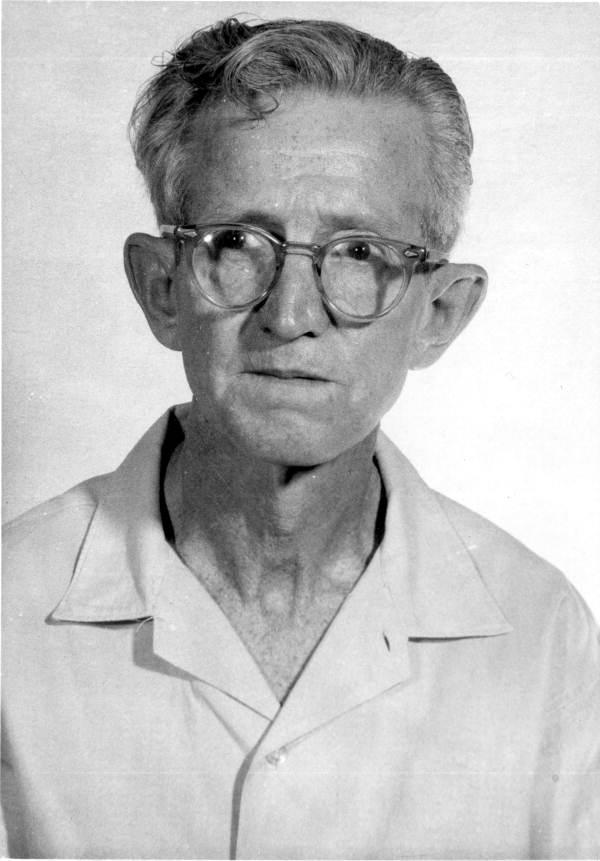
In 1961, Clarence Earl Gideon was charged with breaking into a pool hall in Panama City, Florida. He asked the court to appoint a lawyer because he could not afford one. The judge refused, and Gideon was convicted after representing himself.

From prison, Gideon wrote a petition to the Supreme Court by hand. In 1963, in Gideon v. Wainwright, the Court held that the Sixth Amendment right to counsel applies in state courts, so anyone charged with a felony who cannot afford a lawyer must be given one. Retried with a lawyer at his side, Gideon was acquitted.

The next year, Congress passed the Criminal Justice Act of 1964 to provide counsel in federal court. The Act later authorized Federal Public Defender offices like ours, staffed by full-time federal defenders.

Black-and-white portrait of Clarence Earl Gideon
Clarence Earl Gideon (1910–1972)